

Field of Glory Wargaming at Warfare 2008
So, one game down, one defeat, and a realization that my army had actually stood little if any chance. Lets hope all the Parthians were up at the top of the table.
After a large Roast Dinner sandwich and a lager shandy (appropriate for my army) I found myself facing a Dutch-led Early Carthaginians army.
You can see the list and find out all about the EAP here
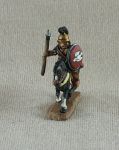
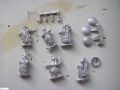
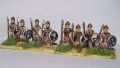
Pictures of Carthaginian Troops from my Ancients Photo Directory
Deprecated: Creation of dynamic property cpm::$cfg is deprecated in /data03/madaxe/public_html/15mm/cpmfetch/cpmfetch_dao.php on line 96
 |
![IMGP1112_[640x480]_[640x480].JPG](http://www.madaxeman.com/15mm/albums/OTTOMAN/thumb_IMGP1112_%5B640x480%5D_%5B640x480%5D.JPG "IMGP1112_[640x480]_[640x480].JPG") |
 |
 |
![IMGP5918_[1024x768].JPG](http://www.madaxeman.com/15mm/albums/Xyston/XystonCart/thumb_IMGP5918_%5B1024x768%5D.JPG "IMGP5918_[1024x768].JPG") |
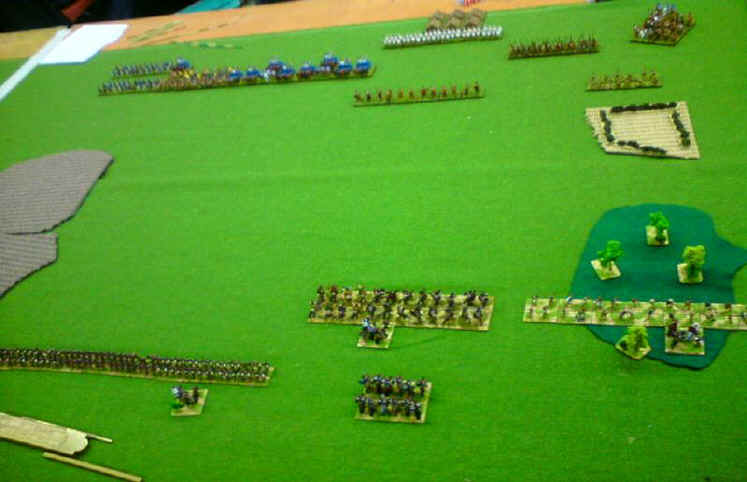
This felt much more like a proper battle. Both sides has some heavy and some loose formation foot, a few skirmishers, a handful of light horse supported by a blob of cavalry - the only difference was the Carthaginians relied on their heavy chariots and the Romans on their legions.
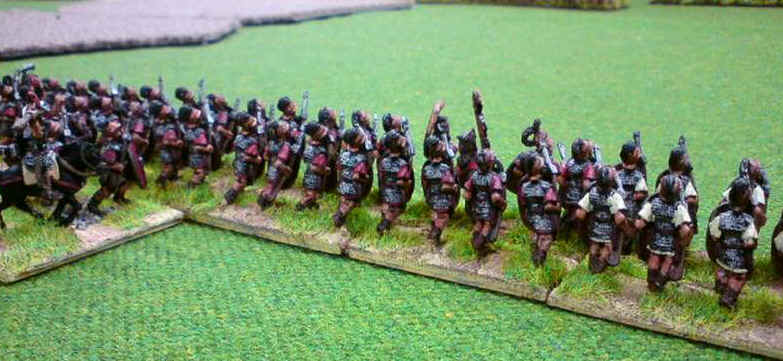
This time the legions were a lot more confident. My plan and army construction looked clever as my 2 Dacian units were facing some Ligurians, who were worse at impact and in melee. The Carthaginian light horse were also outmatched by mine, and they had practically no light foot so my bowmn and slingers could gang up on his cavalry and poor quality foot with impunity.
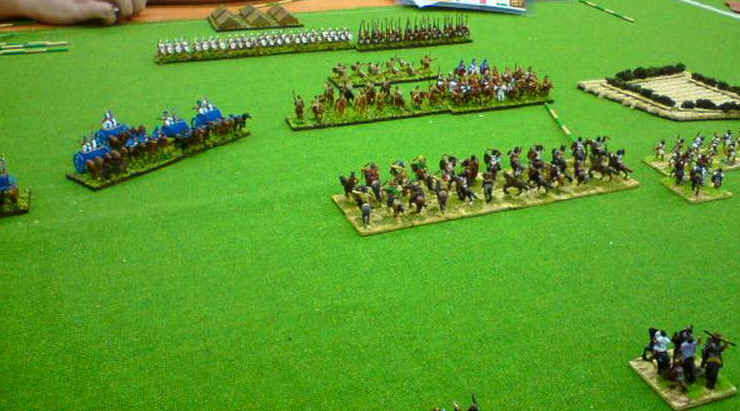
The confident Romans pushed their light horse forward - drawing off one of the 2 chariot units who rushed to support their under-pressure left wing.
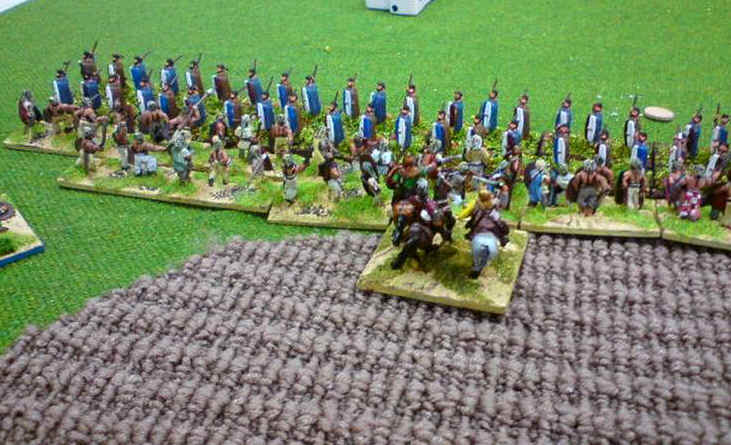
The Dacians also wasted no time, and attacked with alacrity (and big sharp swords) But even against the far weaker light spear armed Ligurians the dice were playing their part, and half of the Dacians went disrupted, and also suffered casualties in the process.
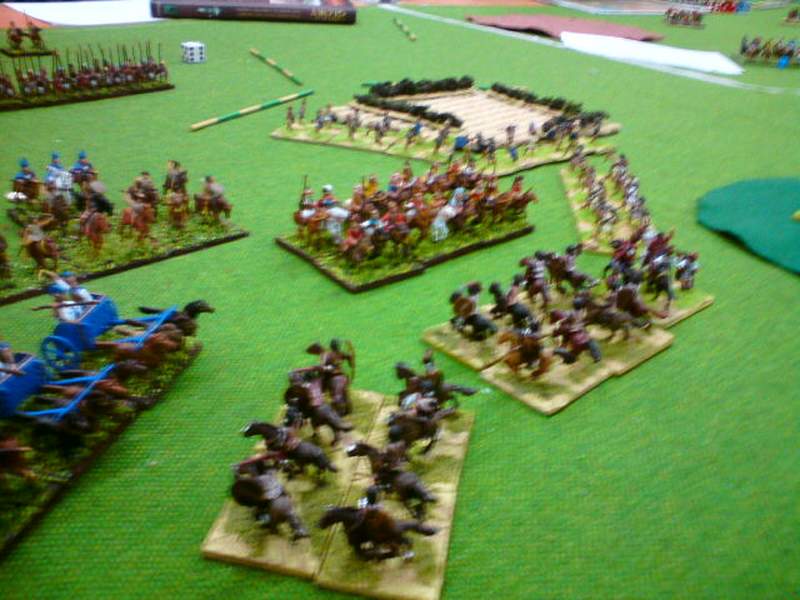
In one of the games first instances of unacceptable levels of camera shake, the Roman light foot were taking advantage of half-decent terrain - an enclosed field - to pour unopposed fire into the flanks are rear of the Carthaginian cavalry who had little option but to push forward to try and drive my light horse off.
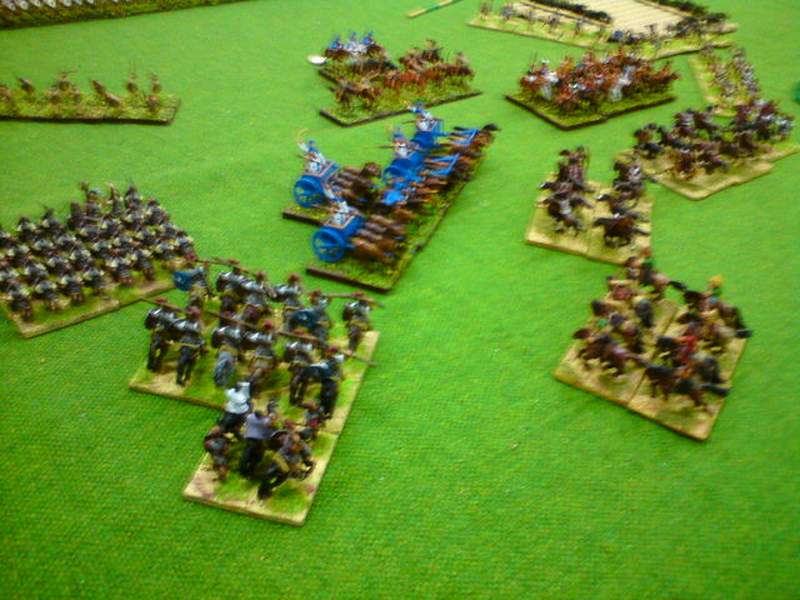
But as the Carthaginian chariots rashly charged the evading light horse, their flanks became exposed to the Roman cavalry, who had been held in reserve behind the legions
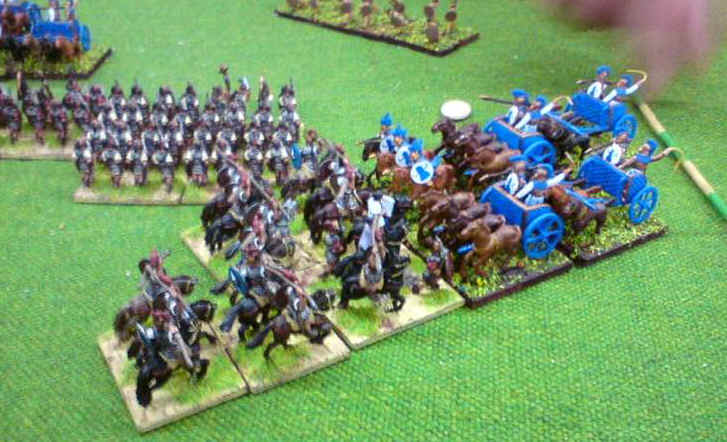
Despite charging into the flank of the chariots, the Roman cavalry were making heavy work of the battle, and failed to inflict any casualties on the wheelie-bin unit.
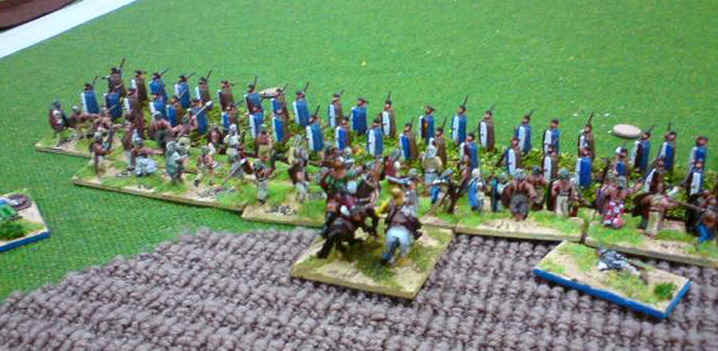
The Dacians were starting to have extreme skepticism about the merits of FoG, as despite being up in every bound of combat, maximising their dice in all phases, having rear support and being led by their own general, they were losing bases and losing cohesion against the weaker Ligurians. Soon both units of both sides were fighting disrupted!
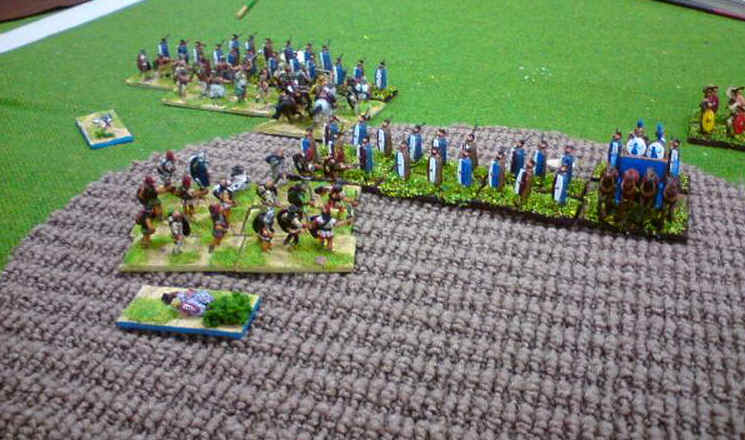
This of course was the ideal time to lose again, roll catastrophic cohesion test dice and break instantly, bursting through your own rear support in rout and disrupting them as well whilst the jubilant Ligurians gleefully ignored the odds and swept forward to complete their victory.
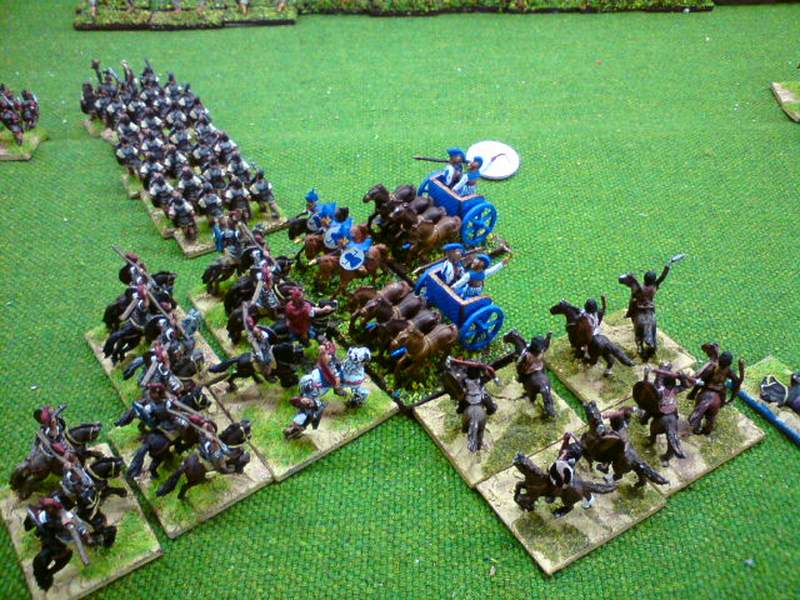
Back in the middle the chariots were still hanging on grimly, and I resorted to the unusual tactic of charging them with light horse in the rear - which I would probably lose in time - in order to give the Roman cavalry an additional + in combat (for enemy fighting in 2 directions).
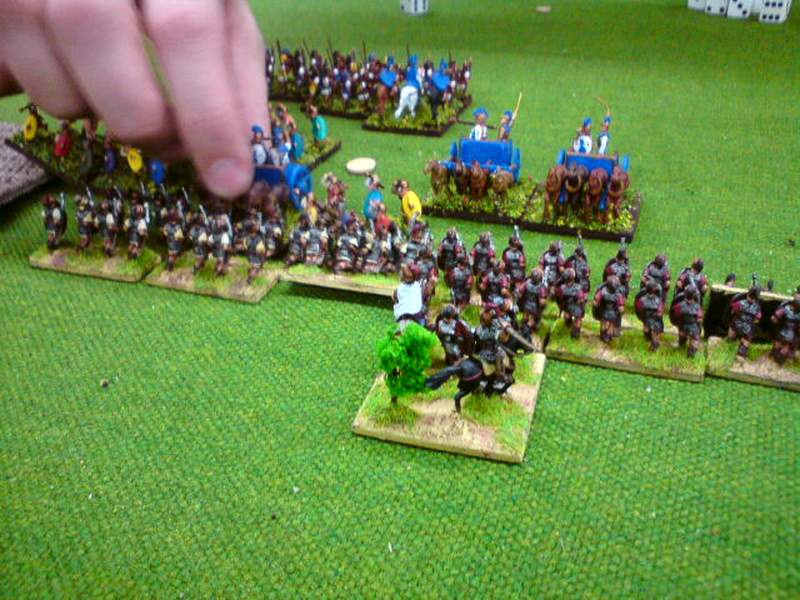
Meanwhile the implacable had beaten off repeated chariot charges by the other unit and fared generally much better, also crushing a unit of spearmen in short order. Next up were some Spanish mercenaries. The tiny Persian army was teetering towards defeat.
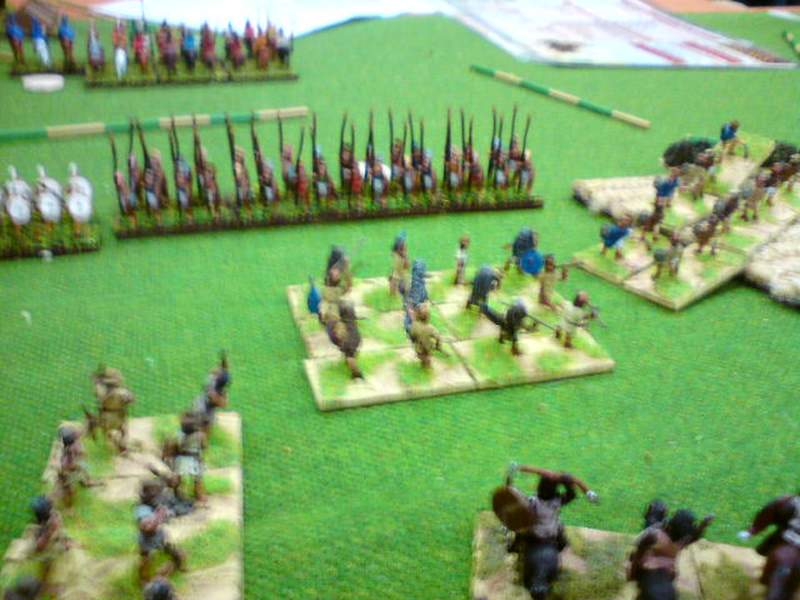
With shooting alone having destroyed the Carthaginians left wing mounted threat, last to fall were the poor quality hoplites. Surrounded, burst through by routing cavalry, and shot to pieces by unmatchable roman skirmishers they simply stood there until their resolve crumbled, and with them the rest of the army went home.
The battle was won!
Post Match Summary
This worked out a lot better - similarly constructed armies faced each other, and my plans of winning light horse and skirmisher battles worked perfectly to rack up some easy units before the main battle lines clashed.
What on earth happened on my left with the Dacians I don't quite know - having done all the textbook things right of maximizing frontage at impact, and with troops with the highly unusual opportunity to be up a POA at both impact and in melee I had still lost - both in protracted combat, and then spectacularly through a single bad cohesion test with my average troops.
The downside was that to win a game (mostly on the right) by shooting an enemy who had no answer to massed skirmishers felt somewhat unsporting, and having had that done to me in the previous game I was starting to wonder if victory is achieved by having massive superiority in one particular troop type, rather than by close and clever collaboration between various types - which could cause trouble for my army again if I came up against another more one-dimensional army led by someone who had worked this out before as well.
Hannibal's Post Match Analysis
Well you at least won. And against a brilliant army, the Carthaginians. But a win is a win, and they all count - no extra points for style here my friend, and a win by not risking large parts of your army is technically very good, so why you are whingeing I'm not really sure.
Lets start with the bad bits however. The Dacians are average troops. This means one crap cohesion test and its all over for them. It means they suffer from bad dice - and they suffer in spades. Why on earth you think you can rely on 2 big un-maneuverable units with these sorts of characteristics I don't know - and I'm also not sure what their real function is?
As far as I can see its to give you the opportunity to commit 3 of your units (including the rear support one) on a fairly risky chance to beat up someone else's one or two, probably smaller and cheaper, units of medium foot ... and this wonderful opportunity only happens if your opponent is daft enough to stick the aforementioned one or two units in a lump of terrain and paint "COME AND GET ME" on their shields in big fat red letters in Greek, Latin or probably some half-baked Persian mumbo jumbo made up language where instead of letters there are just a set of infantile squiggles that look like a row of badly transcribed streaks of camel p-ss dribbling down a stable wall?
So, if the opponent doesn't oblige, and maybe just has a couple of skirmisher units in there, or sits a unit of HF just behind it - what are your Dacians going to do then? They can't be committed in the open. They are too unwieldy to move up and threaten a flank. And in any case, your legions are going to need to advance past any terrain on the table anyway if you want to win the game. Frankly they are a liability and awaste of points. You should have had more legions, period.
NEXT!!!
The stage was set for the next round
The Ancient Army List Index
The Rise of Rome (280 BC to 25 BC) Mid Republican Roman ; Late Republican Roman ; Gallic ; Pyrrhic ; Later Carthaginian ; Ancient Spanish ; Later Macedonian ; Later Seleucid ; Later Ptolemaic ; Attalid Pergamene ; Numidian or early Moorish ; Pontic ; Early Armenian ; Parthian ; Later Jewish ; Illyrian ; Spartacus Slave Revolt ; Bosporan ;
Storm of Arrows - Western Europe in the Later Middle Ages (1300 AD to 1500 AD) Medieval French ; 100-yrs War English (Continental) ; 100-yrs War English (Britain) ; Later Medieval Scots ( Britain) ; Later Medieval Scots (Continental) ; Later Scots Isles & Highlands ; Medieval Welsh ; Later Anglo-Irish ; Medieval Irish ; Low Countries ; Later Medieval German ; Italian Condotta ; Swiss ; Free Company ; Medieval Burgundian ; Medieval Danish ; Medieval Swedish ; Medieval Castilian ; Medieval Crown of Aragon ; Medieval Portugese ; Later Granadine ; Navarrese ; Ordonnance French ; Wars of the Roses English ; Ordonnance Burgundian ; Santa Hermandad Nueva Castilian
Immortal Fire - The Greek, Persian & Macedonian Wars (550 BC - 146 BC)
Classical Greek ;
Early Achaemenid Persian ;
Lydian ;
Thracian ;
Syracusan ;
Early Carthaginian ;
Skythian or Saka ;
Kyrenean Greek ;
Late Dynastic Egyptian ;
Alexandrian Macedonian ;
Later Achaemenid Persian ;
Classical Indian ;
Early Successor ;
Early Sarmatian ;
Galatian ;
Hellenistic Greek ;
Graeco-Bactrian ;
Graeco-Indian ;
Indo-Greek :
Legions Triumphant - Imperial Rome (25 BC to 493 AD) Dominate Roman ; Principate Roman ; Foederate Roman ; Later Sarmatian ; Early German ; Dacian or Carpi ; Ancient British ; Caledonian ; Early Alan ; Jewish Revolt ; Sassanid Persian ; Kushan or Indo-Skythian ; Palmyran ; Early Frankish, Alamanni, Burgundi, Limigantes, Rugian, Suevi or Turcilingi ; Western Hunnic ; Early Visigothic & Early Vandal ; Early Ostrogothic, Herul, Sciri or Taifali ; Early Anglo-Saxon, Bavarian, Frisian, Old Saxon or Thuringian ; Gepid or Early Lombard ; Early Scots Irish ; Early Pictish ; Hephthalite Hunnic ;
Swords & Scimitars - The Crusades (1096 AD to 1311 AD) Early Crusader ; Later Crusader ; Fatimid Egyptian ; Georgian ; Seljuk Turk ; Cuman ; Komnenan Byzantine ; Post Latin Conquest Byzantine ; Ilkhanid Mongol ; Mamluk Egyptian ; Cilician Armenian ; Syrian States ; Khwarazmian ; Ayyubid Egyptian ; Middle Serbian ; Middle Bulgarian ; Medieval Cypriot ; Latin Greece ; Pecheneg ;
Eternal Empire - Eastern Europe and the Rise of the Ottomans (1300 AD to 1500 AD) Early Ottoman Turkish ; Later Ottoman Turkish ; Tatar ; Later Russian ; Later Serbian Empire ; Later Bulgarian ; Later Lithuanian ; Later Polish ; Later Teutonic Knights ; Catalan Company ; Middle Hungarian ; Moldavian or Wallachian ; Albanian ; Timurid, White Sheep Turcoman or Black Sheep Turcoman ; Later Hungarian ; Hussite ;
Decline & Fall - Byzantium and Islam (493 AD to 1071 AD) Early Byzantine; Maurikian Byzantine ; Thematic Byzantine ; Nikephorian Byzantine ; Later Moorish ; Later Visigothic ; African Vandal ; Italian Ostrogothic ; Early South Slav ; Lombard ; Avar ; Arab Conquest ; Early Bulgar ; Ummayad Arab ; Abbasid Arab ; Early North African Dynasties ; Khurasanian Dynasties ; Bedouin Dynasties ; Dailami Dynasties ; Pecheneg ; Ghaznavid ; Western Turkish (includes Khazar);
Wolves From The Sea - The Hairy European Dark Ages Post Roman British ; Early Welsh ; Later Scots Irish ; Merovingian Frankish ; Later Pictish ; Early Slavic ; Middle Anglo Saxon ; Astur Leonese ; Andalusian ; Early Navarrese ; Carolingian Frankish ; Viking ; Magyar ; Great Moravian ; Early Scots ; Rus ; Norse Irish ; Early Medieval French ; Early Medieval German ; Norman ; Early Polish ; Anglo Danish ;
Swifter Than Eagles - The Biblical Book Nubian ; Early Libyan ; Later Sumerian or Akkadian ; Early Nomad Allies ; Old or Middle Kingdom Egyptian ; Hyksos ; Mitanni ; Syro-Canaanite ; New Kingdom Egyptian ; Later Minoan or Early Mycenaean ; Hittite Empire ; ; Middle or Early Neo-Assyrian ; Later Mycenaean or Trojan ; Sea Peoples ; Philistine ; Phoenician Allies ; Neo-Hittite And Aramaean ; Later Hebrew ; Mannaean Allies ; Libyan Egyptian ; Urartian ; Median ; Neo-Elamite ; Proto-Arab Allies ; Cimmerian or Early Skythian ; Neo-Assyrian Empire ; Phrygian Allies ; Kushite Egyptian ; Neo-Babylonian Empire ;
Oaf of Fealty - Early Medieval Europe Feudal Catalan and Early Crown Of Aragon ; Early Hungarian ; Taifa Andalusian ; Feudal Navarrese and Aragonese ; Feudal Castilian Leonese or Portuguese ; Fanatic Berber ; Italo-Norman ; Feudal French ; Imperial German ; Feudal German ; Communal Italian ; Papal Italian ; Early Scots Isles And Highlands ; Feudal Scots ; Early Russian ; Feudal Polish ; Anglo-Norman ; Later Welsh ; Early Lithuanian or Samogitian ; Wendish Prussian or Estonian ; Early Medieval Frisia and Other Free Cantons ; Post-Viking Scandinavian ; Early Plantagenet English ; Later Sicilian ; Early Medieval Irish ; Early Anglo-Irish ; Early Teutonic Knights ; Mongol Invasion ; Early Granadine ; Middle Plantagenet English ;
Empires of The Dragon - China, Korea and Japan Erlitou-Shang Chinese ; Early Northern Barbarian Allies ; Early Zhou Chinese ; Yayoi Japanese ; Early Horse Nomad ; Ko Choson Korean ; Warring States To Western Han Chinese ; Qiang And Di ; Three Kingdoms Korean ; Eastern Han Chinese? ; Three Kingdoms W Jin And S Dynasties Chinese ; Kofun Nara Japanese ; Northern Dynasties Chinese ; Later Hindu North Indian ; Later Hindu South Indian ; Central Asian City States ; Western Wei To Early Tang Chinese ; ; Later Horse Nomad ; Tibetan ; Nepalese Allies ; Parhae Korean ; Late Tang To Five Dynasties Chinese ; Khmer Or Champa ; Thai Allies ; Nanzhao ; Pyu Burmese Allies ; Koryo Korean ; Early Heian Japanese ; Pagan Burmese ; Liao ; Song Chinese ; Xi Xia ; Ghurid Afghan ; Jin ; Late Heian To Muromachi Japanese ; Japanese Warrior Monk Allies ; Mongol Conquest ; Moslem Indian Sultanates ; Medieval Indonesian Or Malay ; Yuan Chinese ; Medieval Burmese ; Ming Chinese ; Yi Korean
Blood and Gold - The Americas Olmec ; Teotihuacan ; West Mexican ; Zapotec or Mixtec ; Toltec ; Chinantec ; Aztec ; Tarascan ; Tlaxcalan Confederacy ; Mayan ; Mochica ; Chanca ; Chimu ; Hatun-Colla ; Canari ; Inca ; Mapuche or Araucanian ; Amazonian Forest Tribes ; Tupi ; Chichimec ; Pueblo Culture ; Mound-Builder Culture ; South-Eastern Woodland Culture ; Timucuan ; Eastern Woodland Culture ; Plains Culture ; Pacific North-West Culture
View My Stats for My FoG Pages