
The Madaxeman
Madaxeman.com's Home Page
  • Home
  • Latest Posts
  • Links Page
  • Battle Reports
  • ADLG Index
  • ADLG Wiki
  • Malifaux
  • C London Club
  • 15mm Gallery
  • 15mm Suppliers
  • Facebook
  • The Podcast
  • 10mm
  • Consent Preferences
 RSS Feed

Madaxemans 10mm & Real World Photo Gallery

Photos from museums, and from my 10mm wargaming collection

  • Home
  • Login
  • Album list
    • Last uploads
    • Last comments
    • Most viewed
    • Top rated
    • By date
    • My Favorites
  • Search

The 10mm & Real World Museums Photo Directory - helping you choose the best 10mm tanks, or dig out real cammo schemes from tanks and other military vehicles in museums and shows around the world. You can also search the directory by manufacturer, army or keyword

Anyone can rate the photos just by clicking on the stars beneath each photo. Ratings use a scale of 0-5 where 5 = excellent and 0 = terrible.

Most viewed
US_2_5_ton_fuel_and_water_trucks.jpg
2.5 ton fuel truck and water truck249 views
IMGP7229.JPG
249 views
IMGP8157.JPG
Funky armoured train model 249 viewsPhotos from the Prague Military Museum Žižkov, showcasing history of the Czech and Czechoslovak Military
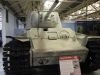
IMGP0567.JPG
KV 1249 viewshe KV's strengths included armor that was impenetrable by any tank-mounted weapon then in service except at point-blank range, that it had good firepower, and that it had good traction on soft ground. It also had serious flaws: it was difficult to steer, the transmission (which was a twenty year old Caterpillar design) was unreliable (and was known to have to be shifted with a hammer), and the ergonomics were poor, with limited visibility and no turret basket
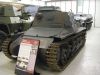
IMGP0568.JPG
Pz II Luchs249 viewsA light reconnaissance tank, the Ausf. L was the only Panzer II design with the overlapping/interleaved road wheels and "slack track" configuration to enter series production, with 100 being built from September 1943 to January 1944 in addition to conversion of the four Ausf. M tanks. Originally given the experimental designation VK 1303, it was adopted under the alternate name Panzerspähwagen II and given the popular name Luchs (Lynx).
IMGP0588.JPG
Pz I Command tank249 viewsBetween 1934 and the mid-1940s several variants of the Panzer I were designed, especially during the later years of its combat history. Because they were obsolescent from their introduction, incapable of defeating foreign armor, and outclassed by newer German tanks, the Panzer I chassis were increasingly repurposed as tank destroyers and other variants. One of the most well known variants was the kleiner Panzerbefehlswagen ("small armored command vehicle"), built on the Ausf. A and Ausf. B chassis
IMGP0604.JPG
Crusader249 viewsThe Tank, Cruiser, Mk VI or A15 Crusader was one of the primary British cruiser tanks of the early part Second World War and perhaps the most important British tank of the North African Campaign. The Crusader's mobility made it a favourite of British tank crews and its Ordnance QF 6 pounder main gun made it more than a match for the early Panzer III and Panzer IV tanks it faced in combat. Retained in service because of delays with its replacement, by late 1942 the lack of armament upgrade combined with the presence of Tiger I Tanks among the Afrika Korps and overheating problems caused by the high temperatures of the desert, led to the design being phased out in favour of the new US-supplied Sherman medium tank. The next British cruiser in combat would be the Cromwell heavy cruiser.
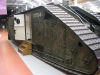
IMGP0619.JPG
WW1 British tanks249 viewsThe Mark I was a rhomboid vehicle with a low centre of gravity and long track length, able to negotiate broken ground and cross trenches. Main armament was carried in sponsons on the hull sides. The hull was undivided internally; the crew shared the same space as the engine.
PICT1761.JPG
The Tiger I249 viewsFrom a 30 degree angle the Tiger's 88mm gun was capable of penetrating the front glacis plate of an American M4 Sherman between 1,800 and 2,100 m (1.1 and 1.3 mi), the British Churchill IV between 1,100 and 1,700 m (0.68 and 1.1 mi), the Soviet T-34 between 800 and 1,400 m (0.50 and 0.87 mi), and the Soviet IS-2 between 100 and 300 m (0.062 and 0.19 mi)
PICT1766.JPG
Lee/Grant249 viewsBritish Lees and Grants were in action against Rommel's forces at the disastrous Battle of Gazala on 27 May that year. They continued to serve in North Africa until the end of that campaign. A regiment of M3 Mediums was also used by the U.S. 1st Armored Division in North Africa. In the North African campaign, the M3 was generally appreciated for its mechanical reliability, good armor and heavy firepower.
3464 files on 347 page(s) 1 - 172 173 174 175 176 177 178 179 180 181 - 347


Visit Madaxeman on

Youtube Logo
Blogger Logo
Facebook Logo
Podbean Logo
Twitter Logo
Spotify Logo
Pinterest Logo
iTunes Logo
Tune In Logo

Podcasts to download from Madaxeman.com

(Also available on Podbean, iTunes and Spotify)


(These are "affiliate links". If you buy something after clicking on them I get a small kickback from eBay)

Page Loads for the 10mm & Museums Gallery:

About This Site & Privacy Information

Powered by Coppermine Photo Gallery