
The Madaxeman
Madaxeman.com's Home Page
  • Home
  • Latest Posts
  • Links Page
  • Battle Reports
  • ADLG Index
  • ADLG Wiki
  • Malifaux
  • C London Club
  • 15mm Gallery
  • 15mm Suppliers
  • Facebook
  • The Podcast
  • 10mm
  • Consent Preferences
 RSS Feed

Madaxemans 10mm & Real World Photo Gallery

Photos from museums, and from my 10mm wargaming collection

  • Home
  • Login
  • Album list
    • Last uploads
    • Last comments
    • Most viewed
    • Top rated
    • By date
    • My Favorites
  • Search

The 10mm & Real World Museums Photo Directory - helping you choose the best 10mm tanks, or dig out real cammo schemes from tanks and other military vehicles in museums and shows around the world. You can also search the directory by manufacturer, army or keyword

Anyone can rate the photos just by clicking on the stars beneath each photo. Ratings use a scale of 0-5 where 5 = excellent and 0 = terrible.

Home > Museums and Shows > Bovington

Most viewed - Bovington
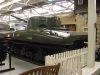
IMGP0594.JPG
Sherman186 viewsThe M4 Sherman, formally Medium Tank, M4, was the primary tank used by the United States during World War II. Thousands were also distributed to the Allies, including the British Commonwealth and the Soviet Union, via lend-lease. In the United Kingdom, the M4 was named after Union General William Tecumseh Sherman, following the British practice of naming their American-built tanks after famous American Civil War generals. Subsequently, the British name found its way into common use in the U.S.
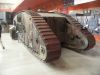
PICT1713.JPG
Mk I WW1 Tank186 viewsThe Mark I was a development of Little Willie, the experimental tank built for the Landships Committee by Lieutenant Walter Wilson and William Tritton in the summer of 1915. It was designed by Wilson in response to problems with tracks and trench-crossing ability discovered during the development of Little Willie.
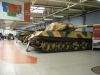
IMGP0583.JPG
Tiger II184 views
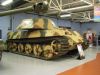
IMGP0574.JPG
King Tiger "Porsche" Turret183 viewsUnlike in this one, the more common "production" turret, sometimes called the "Henschel" turret, was simplified with a significantly thicker flat face, no shot trap (created by the curved face of the initial-type turret), and less-steeply sloped sides, which prevented the need for a bulge for the commander's cupola
IMGP0540.JPG
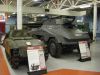
Scimitar 182 viewsFV107 Scimitar is an armoured reconnaissance vehicle (sometimes classed as a light tank) used by the British Army. It is very similar to the FV101 Scorpion but mounts a high velocity 30 mm L21 RARDEN cannon instead of a 76 mm gun. It was issued to Royal Armoured Corps, Armoured Regiments in the Reconnaissance role. Each Regiment had a Close Reconnaissance Squadron of 5 Troops of 8 FV107 Scimitar.
IMGP0552.JPG
Jagdtiger serial number 305004179 viewsThe Jagdtiger was the heaviest armored fighting vehicle operationally used during World War II. The vehicle carried a 128 mm PaK 44 L/55 main gun, capable of out-ranging and defeating any fielded Allied tank. It saw service in small numbers from late 1944 to the end of the war on both the Western and Eastern Front. Tiger ace Otto Carius commanded a company of Jagdtigers. His post-war memoir provides a rare combat history of the Jagdtigers which had been under his command. Although 150 were ordered, only between 77 to 88 were produced. Due to an excessive weight the Jagdtiger was continuously plagued with mechanical problems. Today, three Jagdtigers survive in museums.
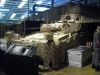
IMGP0550.JPG
Sherman Crab flail tank179 viewsSherman Crabs are displayed at the CFB Borden Military Museum, Ontario, Canada; the Yad La-Shiryon museum in Israel, the Overloon War Museum in the Netherlands; the Bovington Tank Museum in England and in India, at the Armoured Corps Museum in Ahmednagar Fort, Ahmednagar.
PICT1773.JPG
The Tiger I179 viewsThe greater penetrating power of the Tiger's gun meant that it could destroy many of its opponents at ranges at which they could not reach, let alone penetrate. Compounding the danger to Allied tank crews was the superior quality of German optics, allowing them better accuracy at distance and increasing their chances of a hit on the first shot. In open terrain this was a major tactical advantage. Opposing tank units were often required to make a flanking attack in order to knock out a Tiger.
IMGP0561.JPG
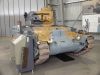
Type 95 Japanese tank178 viewsOriginal paint scheme - The Type 95 Ha-Gō was a light tank used by the Imperial Japanese Army in combat operations of the Second Sino-Japanese War, at Nomonhan against the Soviet Union, and in the Second World War. It proved sufficient against infantry, however, like the American M3 Stuart, it was not designed to fight other tanks
PICT1754.JPG
Matilda II178 viewsWhile the Matilda possessed a degree of protection that was then unmatched in the North African theatre, the sheer weight of the armour mounted on the vehicle contributed to a very low average speed of about 6 mph (9.7 km/h) on desert terrain. At the time, this was not thought to be a problem since British infantry tank doctrine prioritized heavy armour and trench-crossing ability over speed and cross-country mobility (which was considered to be characteristic of cruiser tanks such as the Crusader)
270 files on 27 page(s) 1 2 3 4 5 6 7 8 9 10 11 - 27


Visit Madaxeman on

Youtube Logo
Blogger Logo
Facebook Logo
Podbean Logo
Twitter Logo
Spotify Logo
Pinterest Logo
iTunes Logo
Tune In Logo

Podcasts to download from Madaxeman.com

(Also available on Podbean, iTunes and Spotify)


(These are "affiliate links". If you buy something after clicking on them I get a small kickback from eBay)

Page Loads for the 10mm & Museums Gallery:

About This Site & Privacy Information

Powered by Coppermine Photo Gallery