
The Madaxeman
Madaxeman.com's Home Page
  • Home
  • Latest Posts
  • Links Page
  • Battle Reports
  • ADLG Index
  • ADLG Wiki
  • Malifaux
  • C London Club
  • 15mm Gallery
  • 15mm Suppliers
  • Facebook
  • The Podcast
  • 10mm
  • Consent Preferences
 RSS Feed

Madaxemans 10mm & Real World Photo Gallery

Photos from museums, and from my 10mm wargaming collection

  • Home
  • Login
  • Album list
    • Last uploads
    • Last comments
    • Most viewed
    • Top rated
    • By date
    • My Favorites
  • Search

The 10mm & Real World Museums Photo Directory - helping you choose the best 10mm tanks, or dig out real cammo schemes from tanks and other military vehicles in museums and shows around the world. You can also search the directory by manufacturer, army or keyword

Anyone can rate the photos just by clicking on the stars beneath each photo. Ratings use a scale of 0-5 where 5 = excellent and 0 = terrible.

Home > Museums and Shows > Bovington

Most viewed - Bovington
PICT1801.JPG
Sherman 239 viewsThe gun on the original M4 was the short-barreled medium-velocity 75 mm M3 gun. When it first saw combat in North Africa in late 1942 against the Panzer III and Panzer IV, the Sherman's gun could penetrate the armor of these tanks within 1,000 yd (910 m). U.S. Army Intelligence discounted the arrival of the Tiger I in late 1942 and the Panther tank in 1943, predicting the Panther to be a heavy tank like the Tiger, and doubted they would produce many
IMGP0602.JPG
Sherman238 viewsProduction of the Sherman was favored by the commander of the Armored Ground Forces, albeit controversially, over the heavier M26 Pershing, which resulted in the latter being deployed too late to play any significant role in the war. In the Pacific Theater, the Sherman was used chiefly against Japanese infantry and fortifications; in its rare encounters with much lighter Japanese tanks with weaker armor and guns, the Sherman's superiority was overwhelming. Almost 50,000 vehicles were produced, and its chassis also served as the basis for numerous other armored vehicles such as tank destroyers, tank retrievers, and self-propelled artillery.
IMGP0625.JPG
WW1 British tanks237 views
PICT1719.JPG
Lanchester Armoured Car237 viewsIn January 1929 the first Lanchesters (along with Rolls-Royce Armoured Cars) were received by the 11th Hussars regiment. Because of slow rate of delivery, it took until 1934 to fully equip the unit. In November the regiment was relocated to Egypt to relieve the 12th Royal Lancers, which returned to Britain and took over the cars. In January-February 1935 a provisional D squadron of the 12th Lancers with eight armoured cars served as a peacekeeping force in the Saar region. On 31 December B and C squadrons were sent again to Egypt with 29 armoured cars as a response to the Italian invasion of Abyssinia and strengthening garrisons in Libya. They were used in patrolling the western frontier.
PICT1726.JPG
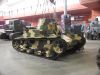
Vickers Mk E Tank237 viewsThe Vickers 6-Ton Tank or Vickers Mark E was a British light tank designed as a private project at Vickers. It was not purchased by the British Army, but was picked up by a large number of foreign armed forces and was copied almost exactly by the Soviets as the T-26. It was also the direct predecessor of the Polish 7TP tank. By the start of World War II it was the second most common tank design in the world after the Renault FT.
PICT1755.JPG
237 views
PICT1787.JPG
DD Sherman236 viewsDD or Duplex Drive tanks, nicknamed "Donald Duck tanks", were a type of amphibious swimming tank developed by the British during the Second World War. The phrase is mostly used for the Duplex Drive variant of the M4 Sherman medium tank, that was used by the Western Allies during and after the Normandy Landings in June 1944.
PICT1826.JPG
Challenger236 viewsChallenger 2 is an extensive redesign of the Challenger 1. Although the hull and automotive components seem similar, they are of a newer design and build than those of the Challenger 1, and fewer than 5% of components are interchangeable. Challenger 2 replaced Challenger 1 in service with the British Army and is also used by the Royal Army of Oman. It has seen operational service in Bosnia, Kosovo and Iraq.
PICT1727.JPG
Vickers Mk II 235 viewsThe Vickers Medium Mark II was a British tank built by Vickers in the Inter-war period.
The Medium Mark II, derived from the Vickers Medium Mark I, was developed to replace the last of the Medium Mark Cs still in use. Production and rebuilding ran from 1925 until 1934. The tank was phased out of service from 1939, replaced by the Cruiser Mk I
PICT1775.JPG
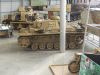
Pz III235 viewsPanzer III was the common name of a medium tank that was developed in the 1930s by Germany and was used extensively in World War II. The official German designation was Panzerkampfwagen III Sd Kfz. 141 (abbreviated PzKpfw III) translating as "armoured fighting vehicle". It was intended to fight other armoured fighting vehicles and serve alongside the infantry-supporting Panzer IV. However, as the Germans faced the formidable T-34, stronger anti-tank guns were needed. Since the Panzer IV had a bigger turret
270 files on 27 page(s) 1 - 17 18 19 20 21 22 23 24 25 26 27


Visit Madaxeman on

Youtube Logo
Blogger Logo
Facebook Logo
Podbean Logo
Twitter Logo
Spotify Logo
Pinterest Logo
iTunes Logo
Tune In Logo

Podcasts to download from Madaxeman.com

(Also available on Podbean, iTunes and Spotify)


(These are "affiliate links". If you buy something after clicking on them I get a small kickback from eBay)

Page Loads for the 10mm & Museums Gallery:

About This Site & Privacy Information

Powered by Coppermine Photo Gallery